
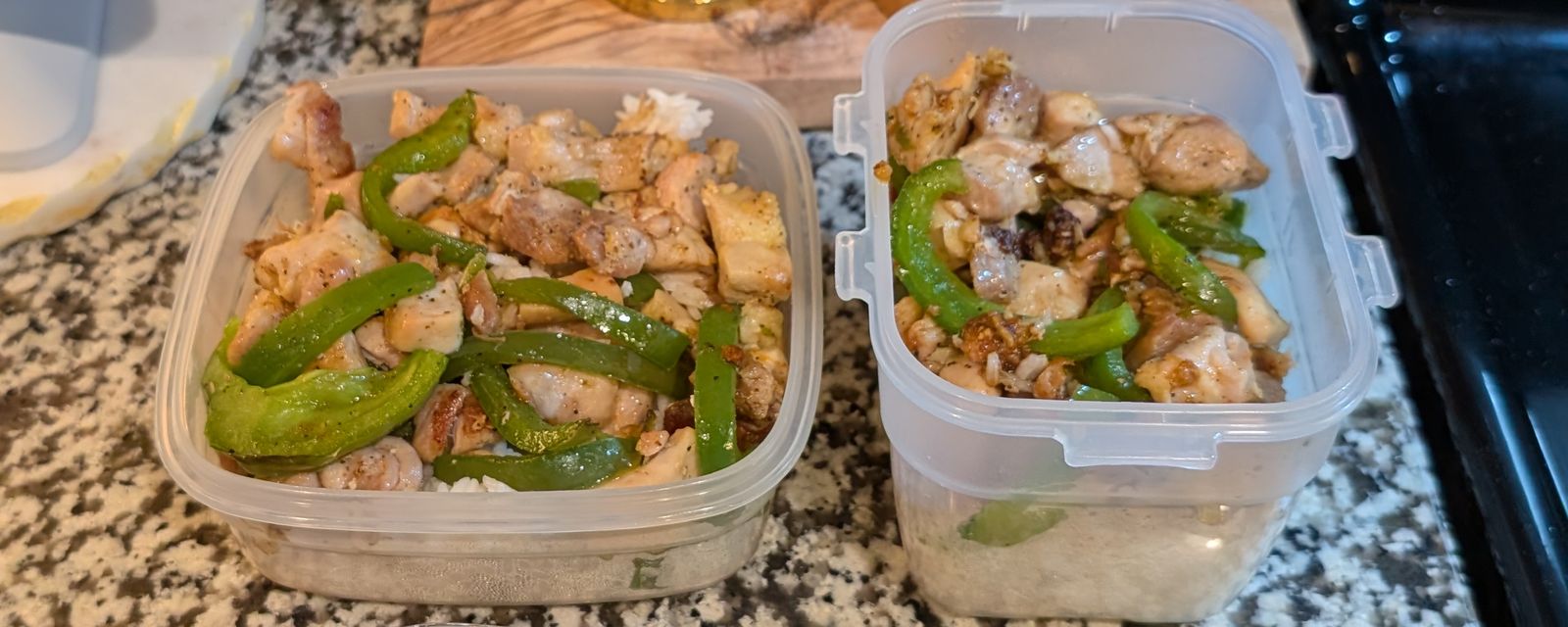
Meal prep has a reputation problem. People picture six hours on a Sunday, forty identical containers of sad chicken and rice, and a fridge that smells like regret by Wednesday. It does not have to be any of that. With a decent plan, you can go from "no food in the house" to "a week of meals mostly handled" in about two hours of actual kitchen time, and you can do it with food you look forward to eating. Here is the system, start to finish.
The strategy: prep components, not plated meals
The single biggest upgrade you can make is to stop prepping finished meals and start prepping components. Instead of assembling twenty complete lunches, you cook a few proteins, a few carbs, and a few vegetables, then combine them differently through the week. Chicken thighs become a rice bowl on Monday, tacos on Tuesday, and a big salad on Thursday. Same prep time, three different dinners, and nothing feels like a rerun by day four.
Components also survive the week better. A fully dressed, fully sauced meal degrades fast. Plain roasted vegetables, cooked grains, and seasoned proteins hold up, and sauce added at mealtime tastes fresh because it is.
Phase 1: Plan the week (about 20 minutes)
Do this before you touch a shopping app or a skillet. You are making three decisions:
- How many meals you actually need. Count honestly. If you eat out on Friday and wing it on Sunday, plan for five dinners, not seven. Overprepping is how food ends up in the trash and how meal prep gets abandoned.
- Your component menu. Two proteins, two carb bases, two or three vegetables, one or two sauces. That is enough variety for a week without turning Sunday into a restaurant shift.
- What each day's meals look like. Sketch it loosely: which components combine into which meals, and which nights get fresh-cooked extras like eggs or a quick stir-fry.
Example component menu
- Proteins: a tray of chicken thighs; a pot of turkey chili
- Carbs: a rice cooker batch of jasmine rice; roasted potatoes
- Vegetables: roasted broccoli and peppers; a bag of slaw mix; cherry tomatoes
- Sauces: a yogurt-herb sauce; your favorite hot sauce from the fridge door
That covers rice bowls, chili nights, loaded potatoes, wraps, and salads, five distinct dinners from one cooking session.
If you track macros, this is also the moment to check that the week adds up: portion the proteins and carbs so your days land near your targets. Doing that math by hand is the tedious part, and it is exactly what an app like Prepwell automates, but a notebook works too. For a fully worked version, see our five-day high protein meal prep plan, with the totals and the grocery list.
Phase 2: Shop once, from one list (about 30 minutes, or 5)
Turn the menu into a single list, then sort it by store section: produce, meat, dairy, pantry, frozen. Sorting by aisle sounds fussy, but it is the difference between one clean lap of the store and four trips back to produce because the list was in recipe order. Check what you already have before you leave; buying a third bottle of cumin is a rite of passage, but you only need to do it once.
The faster version: skip the store entirely. Prepwell builds the list from your plan automatically, shows the estimated total, and sends it to your store in one tap for delivery or pickup; you check out, and Phase 2 becomes five minutes on the couch. Either way, the goal is one shop for the whole week. Repeated midweek store runs are where meal prep plans die.
Phase 3: Batch-cook in parallel (about 90 minutes)
The two-hour total depends on one idea: appliances work at the same time. You are not cooking six things in sequence; you are running an oven, a stovetop, and ideally a rice cooker at once, and the order of operations does the heavy lifting.
Example 90-minute run
- 0:00 Oven to 425°F. Start rice in the rice cooker. Season chicken.
- 0:10 Chicken and potatoes into the oven. Start chopping vegetables.
- 0:25 Chili base going in a pot on the stove.
- 0:40 Chicken out to rest once it reads 165°F inside; vegetables into the oven. Whisk the sauce while things roast.
- 1:00 Vegetables out. Everything cooling in a single layer, which matters: containers sealed hot mean soggy food and a fridge full of condensation.
- 1:15 Portion into containers, sauces separate. Wipe down as you go.
- 1:30 Done. Kitchen clean, fridge loaded, week handled.
A few batch-cooking rules that earn their keep:
- Slightly undercook anything you will reheat. Vegetables especially. They finish cooking in the microwave and stay pleasant instead of turning to mush.
- Store sauces and crunchy things separately. Dress at mealtime. This one habit fixes most "meal prep food is gross" complaints.
- Cool before sealing, then refrigerate promptly. Food safety guidance is to get cooked food into the fridge within about two hours; portioning into shallow containers helps it cool fast.
- Label with a day if you cooked a lot. Most cooked components are best eaten within about three to four days; freeze anything you will not reach by then. When in doubt, follow standard food-safety guidance rather than optimism.
Eat the week: assembly, not cooking
During the week, "making dinner" now means seven minutes of assembly: carb base in a bowl, protein on top, vegetables on the side, sauce over everything, maybe a handful of something fresh. If you portioned with macro targets in mind, the numbers land close to plan without weekday math. Keep one or two wildcard dinners in the plan, a night for leftovers-remix or a fried-egg-on-rice situation, so the system bends instead of breaking when life happens.
The gear that actually matters
You do not need a special meal-prep arsenal, but a short list of tools makes the two-hour version possible:
- Two large sheet pans. Parallel roasting is the engine of the whole system. Crowded pans steam instead of roast, so two half-sheets beat one overloaded pan every time.
- A rice cooker or Instant Pot. Not because rice is hard, but because it is a burner and fifteen minutes of attention you get back. Set it, forget it, and the carb base cooks itself while you do everything else.
- A dozen matching containers. Matching, so they stack and you can see what you have. Glass survives the microwave and does not stain; a few small cups for sauces keep dressings off the food until mealtime.
- A kitchen scale if you track macros. Portioning by weight while you pack containers takes seconds and saves you from weighing anything midweek.
That is the list. Everything else, the gadget drawer can stay closed.
What the first week is really like
Your first prep will take longer than two hours, because you will be finding your rhythm and probably your baking sheets. That is normal. By the third week the sequence feels automatic.
Here is the part most guides leave out: I do not look forward to meal prep. The kitchen ends up a mess, it is real work, and there is always a moment about an hour in when I would rather be doing anything else. I do it anyway, because the payoff is not the Sunday. It is the other six days. When breakfast, lunch, and dinner are already in the fridge, the whole week runs differently: no 6pm decisions, no drive-through, no eating the wrong thing because it was the only thing. And the weeks I skip it, I feel it by Tuesday. The week is thrown off in a way that has nothing to do with food and everything to do with having one less thing decided.
And if you want the planning, portioning, and list-building done for you, that is what Prepwell does: it plans the week around your targets, turns it into one grocery list with an estimated total, and hands you the batch-cook steps in order.
Frequently asked questions
How long does meal-prepped food last in the fridge?
Standard food-safety guidance is three to four days for cooked leftovers. Cook on Sunday for Monday through Thursday, and freeze anything meant for Friday or later.
What should I meal prep first if I am new to it?
Components, not full meals: one protein, one carb base, one tray of vegetables. Combine them differently through the week. Once that is routine, add a second protein.
Can I meal prep without a free Sunday afternoon?
Yes. Split it: cook the protein and rice one evening, about 40 minutes, and roast the vegetables another. The two-hour total does not have to happen in one sitting.
Do I need special containers?
No, but a dozen matching containers that stack, plus a few small cups for sauces, make the week easier. Glass survives the microwave and does not stain.